Join the beta

Guide › A tour in pictures

A tour in pictures

What Cursans reads from your runs

The ideas behind every screen, shown on real runs.

Your watch measures. Cursans figures out what it means.

Any app can show you a pace and a heart rate. Cursans goes further: it finds the structure of every session, models your fitness and thresholds, compares each run with your own history, and only calls something progress when the evidence holds up. You get answers, not just numbers.

  • Fitness and threshold models
  • Progress judged against your own variation
  • Fitness trends per workout type
  • Rep-by-rep session reads
  • Efficiency and durability
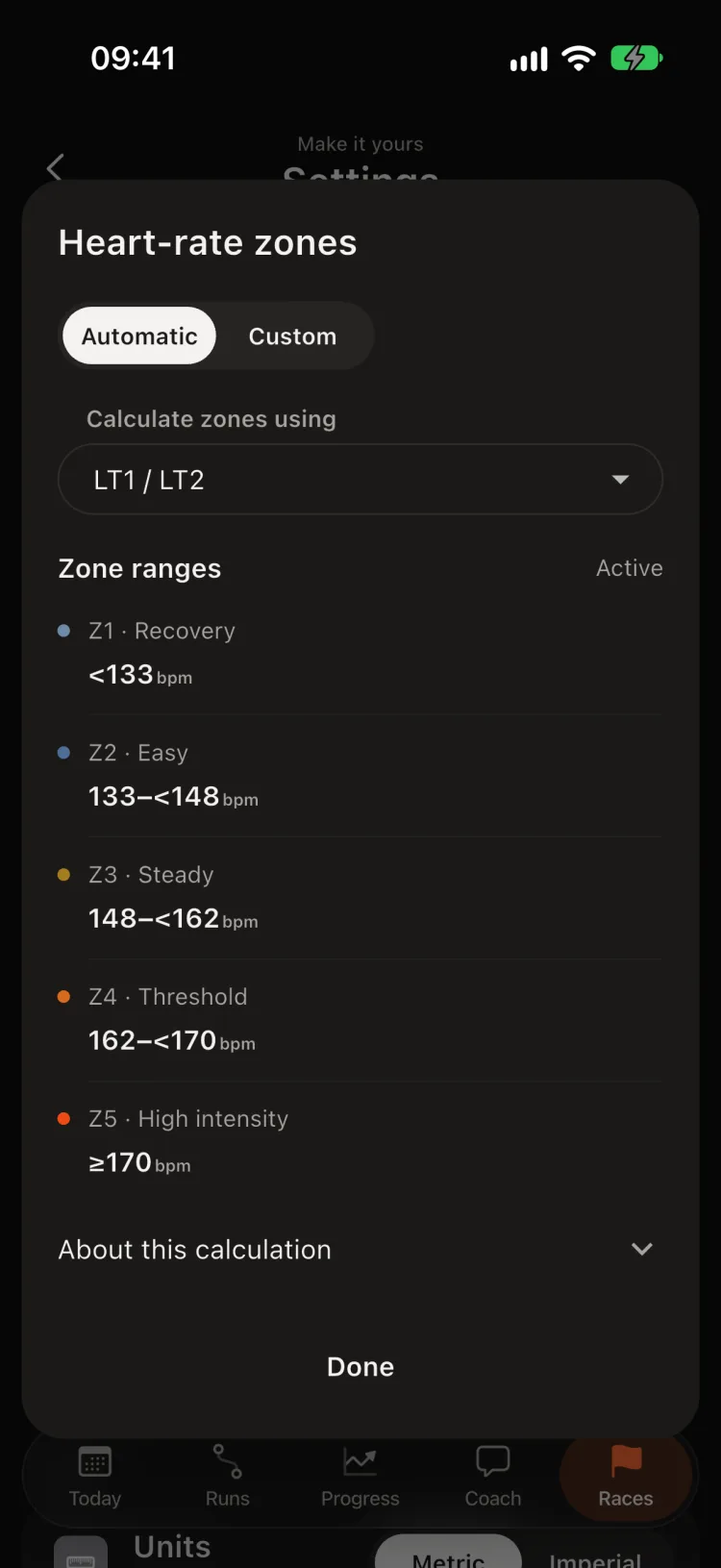
  • Heart-rate and pace zones
  • Recovery between reps
  • Training load and freshness
  • Running mechanics
  • Personal records
  • Race predictions
  • Weekly recap
  • On-device coach
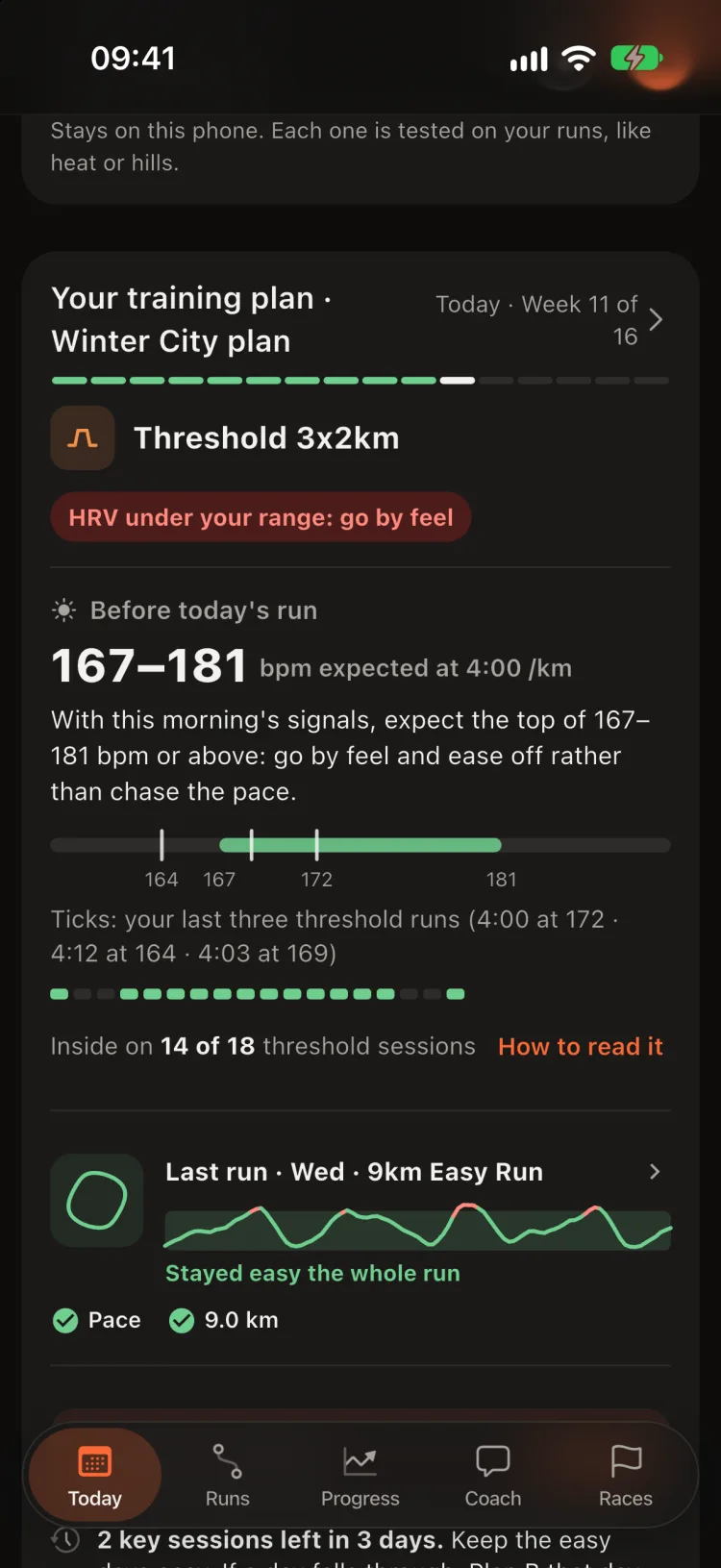
Today: today’s planned run with its targets and how you come in
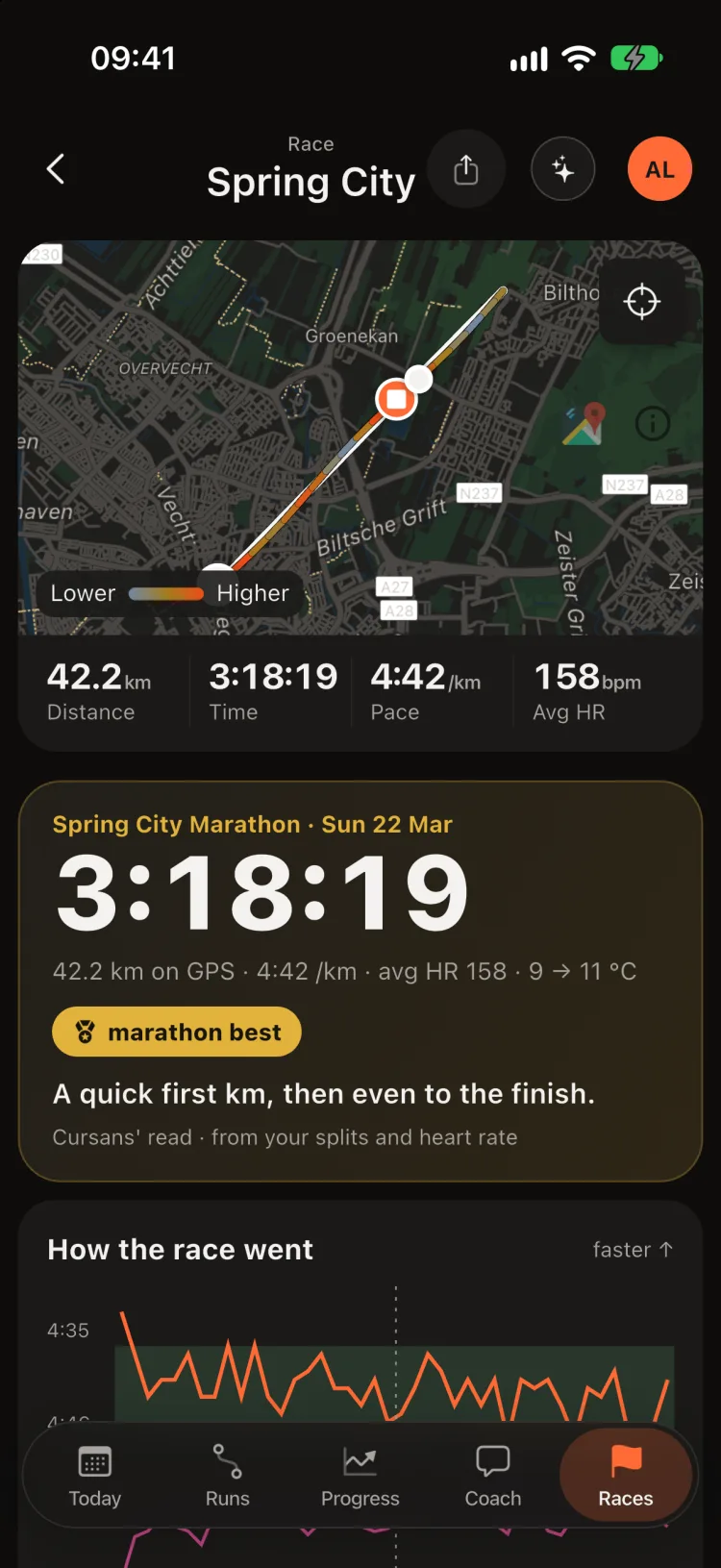
A race page: the result and how the race went km by km
1 sreadings per second from your watch, kept whole
4workout types judged separately: easy, long, threshold, intervals
20+measures over time, from pace to ground contact
0accounts: your runs stay on your iPhone unless you share them

More than measurements

Your watch records what happened. Cursans works out why it matters, in three ways.

It models

What your body can do

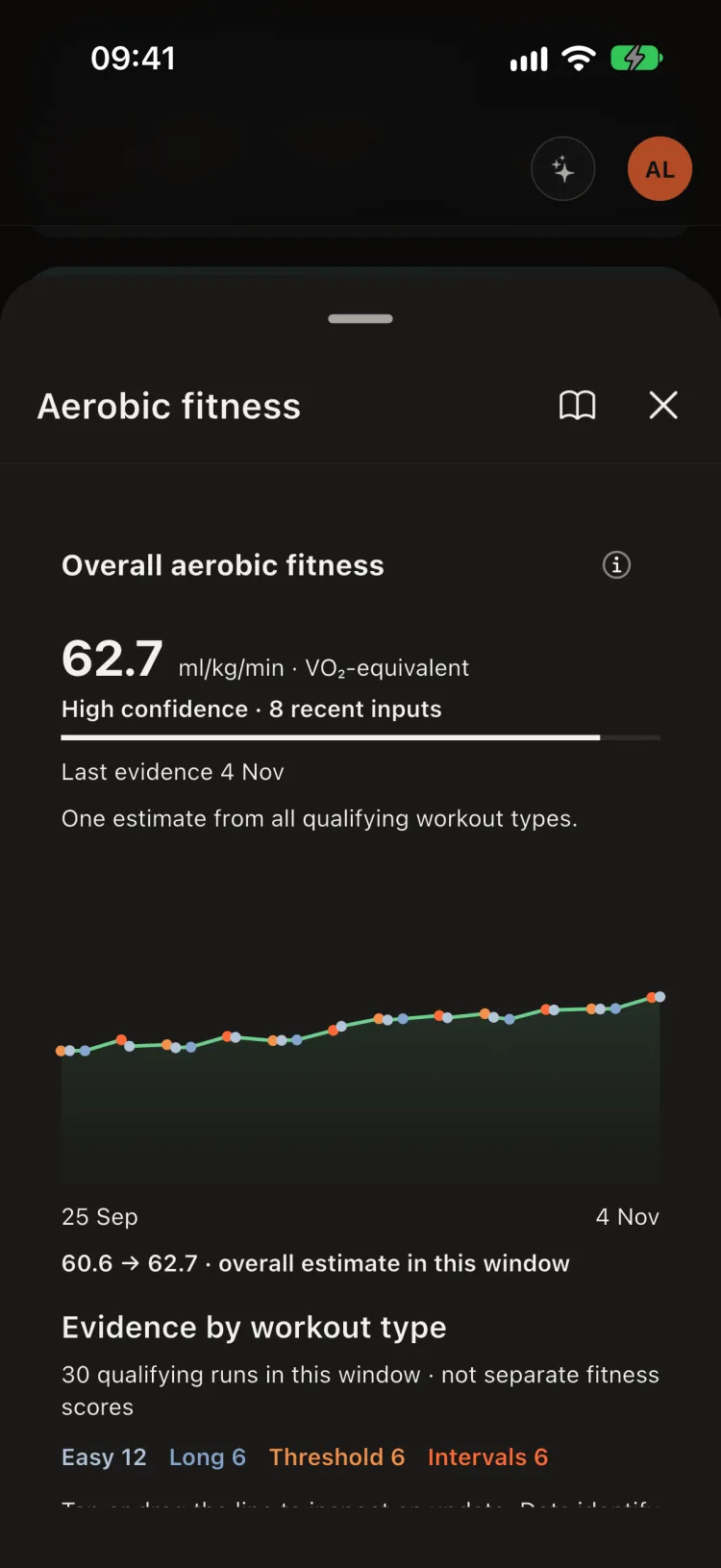
  • Aerobic fitness (a VO₂-equivalent) from your runs, placed against norms for your age.
  • Your two thresholds, LT1 and LT2, as heart rates and paces, and your zones from them.
  • Training load and freshness with the fitness–fatigue model: how much you carry, how fresh you are.
  • Race times for 5K to marathon from your best efforts, with a likely range.
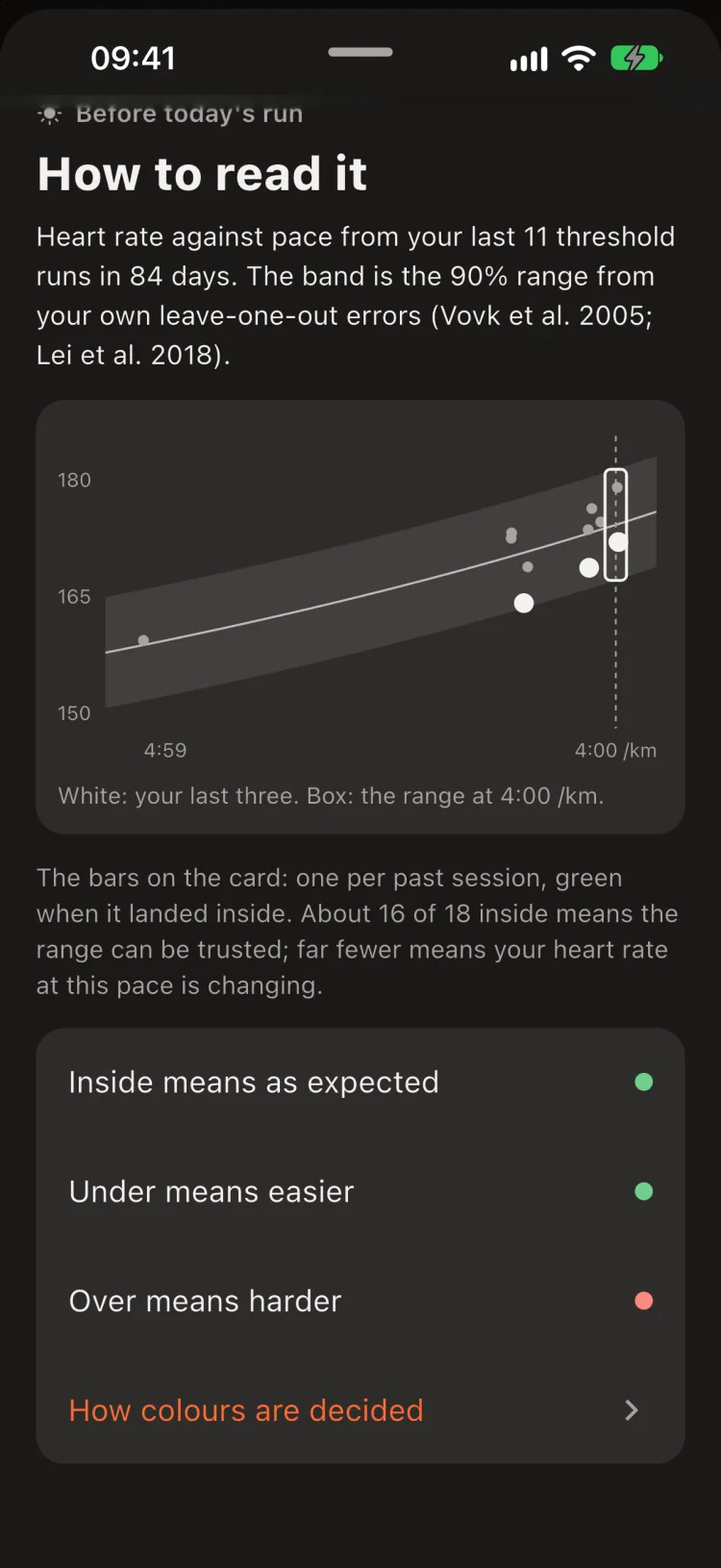
  • Efficiency at the same effort: speed per heartbeat, so a faster run at a higher heart rate does not pass for progress.

It compares

Every run with the right reference

  • Session structure first: warm-up, reps, floats and recoveries come from your watch's laps, your plan or a session you paste as written, and are detected when none exists.
  • Rep against rep: only reps of the same length, so a 400 m is never judged against a 1.2 km.
  • First half against second half on easy and long runs, and quarter by quarter for durability: did the pace hold, and did it cost more heartbeats?
  • Each run against your usual: the median of the same kind of session over the last 24 weeks.
  • Block against block: the last six weeks against the six before, or any training blocks you define (see it below).

It judges

Progress, not just a line going up

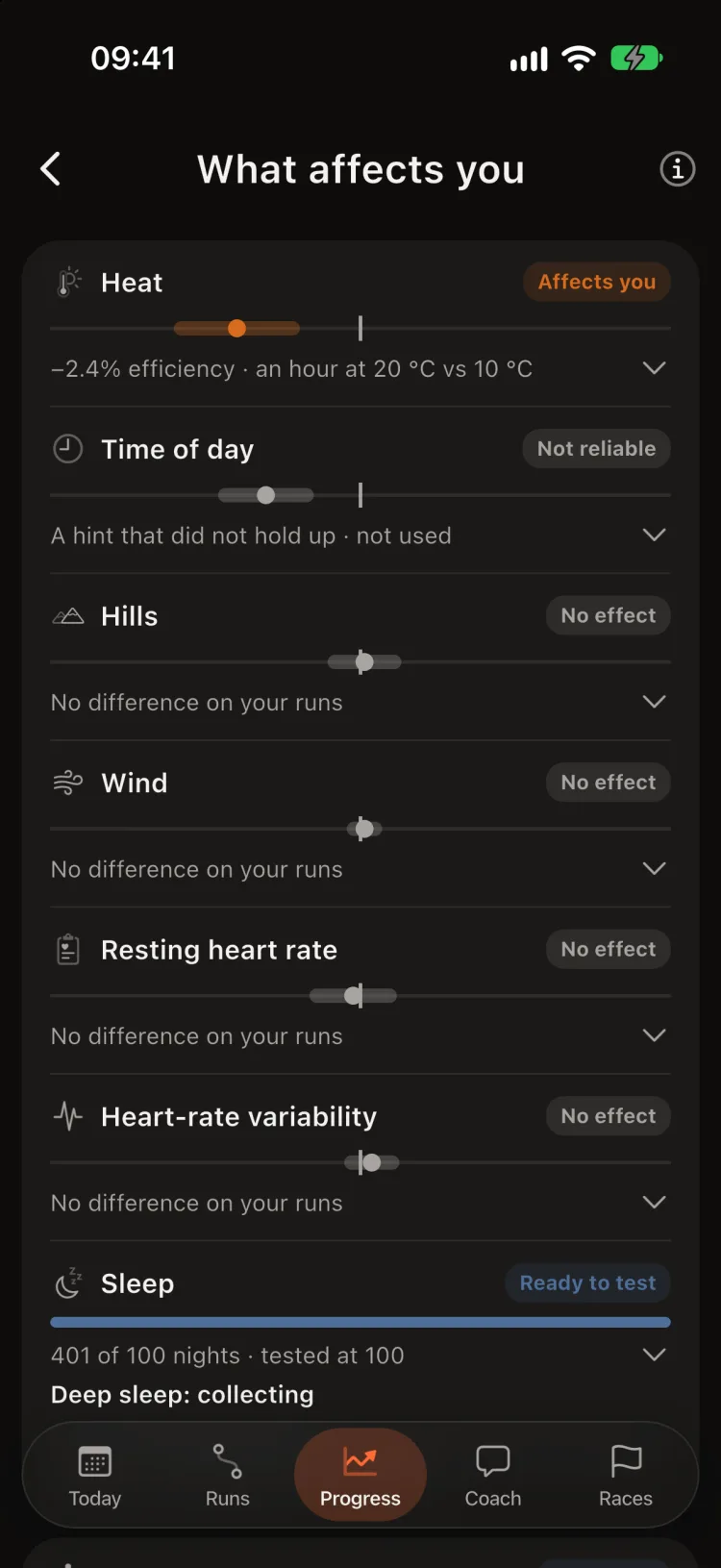
  • Improving only when the change is larger than your normal run-to-run variation and the trend is clear, read from a robust trend line that one good day cannot bend.
  • Per workout type: easy, long, threshold and intervals each have their own measures, because each trains something different.
  • Honest about doubt: "unclear" when runs are too scattered, "too few runs" when there is not enough yet, and rings on runs that may be mislabelled or misrecorded.
  • Sources named: every rule says where it comes from, and Cursans' own choices are marked as such.

See it on your own runs

Screens from the app, with a made-up runner’s training library read end to end.

Today

Know in one sentence how it is going

Your status opens with a plain verdict and the evidence under it. The ring is your form; next to it, how much you have trained over about six weeks, how much in the last week, and whether this week runs above or below your usual.

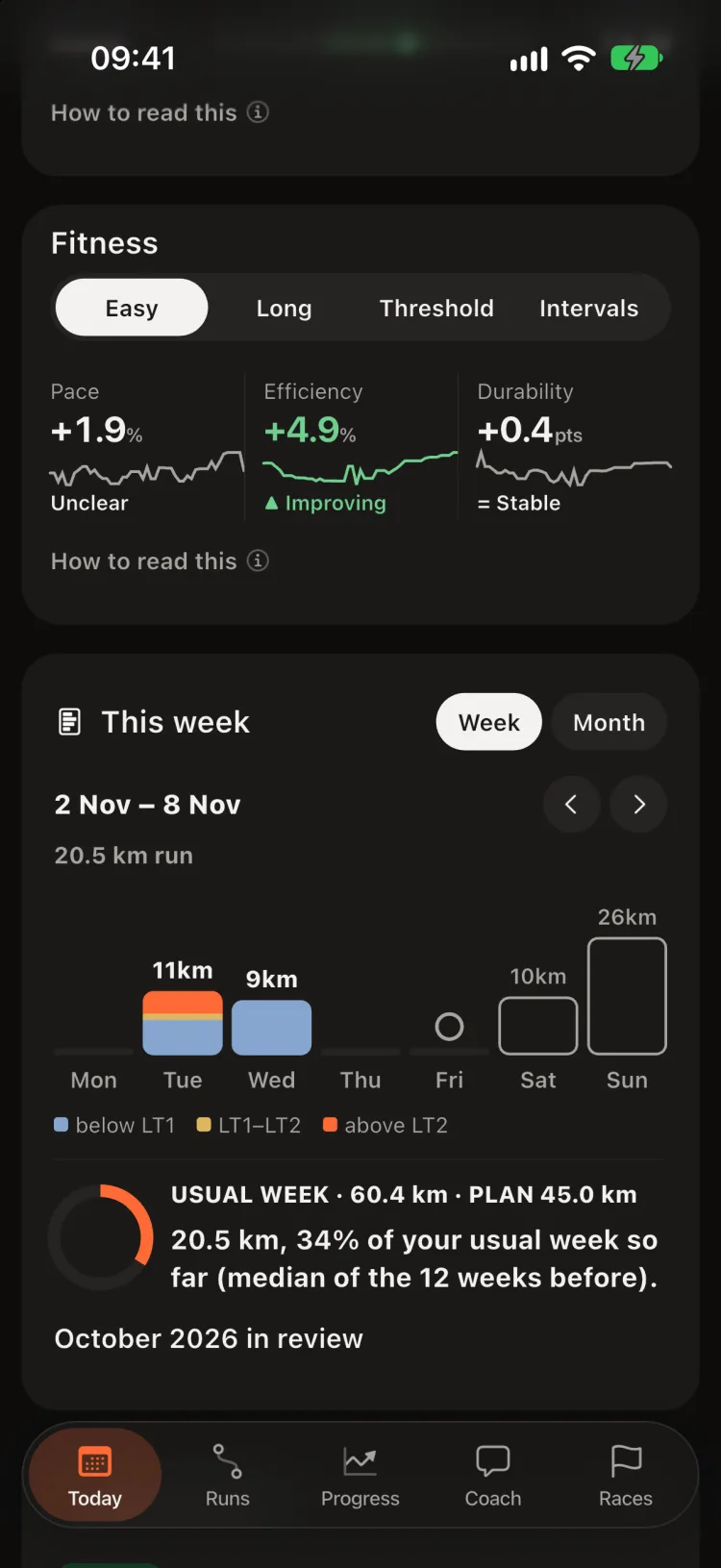
  • Pace, efficiency (speed per heartbeat) and durability for each workout type, each with ▲ improving, = stable or ▼ declining.
  • Tap a tile to open the full trend.
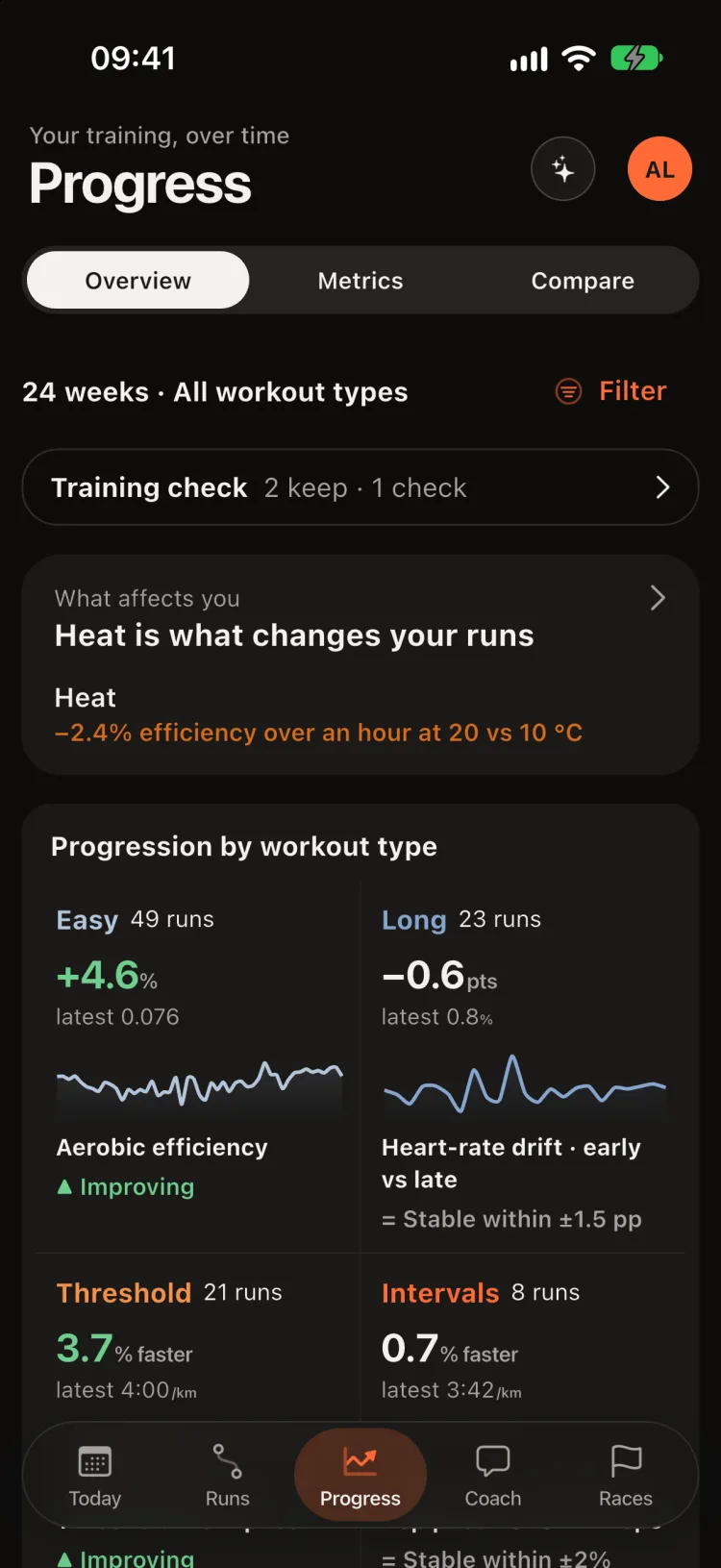
Fitness per workout type: pace, efficiency and durability, each with its verdict

Every session

Every session read like a coach would

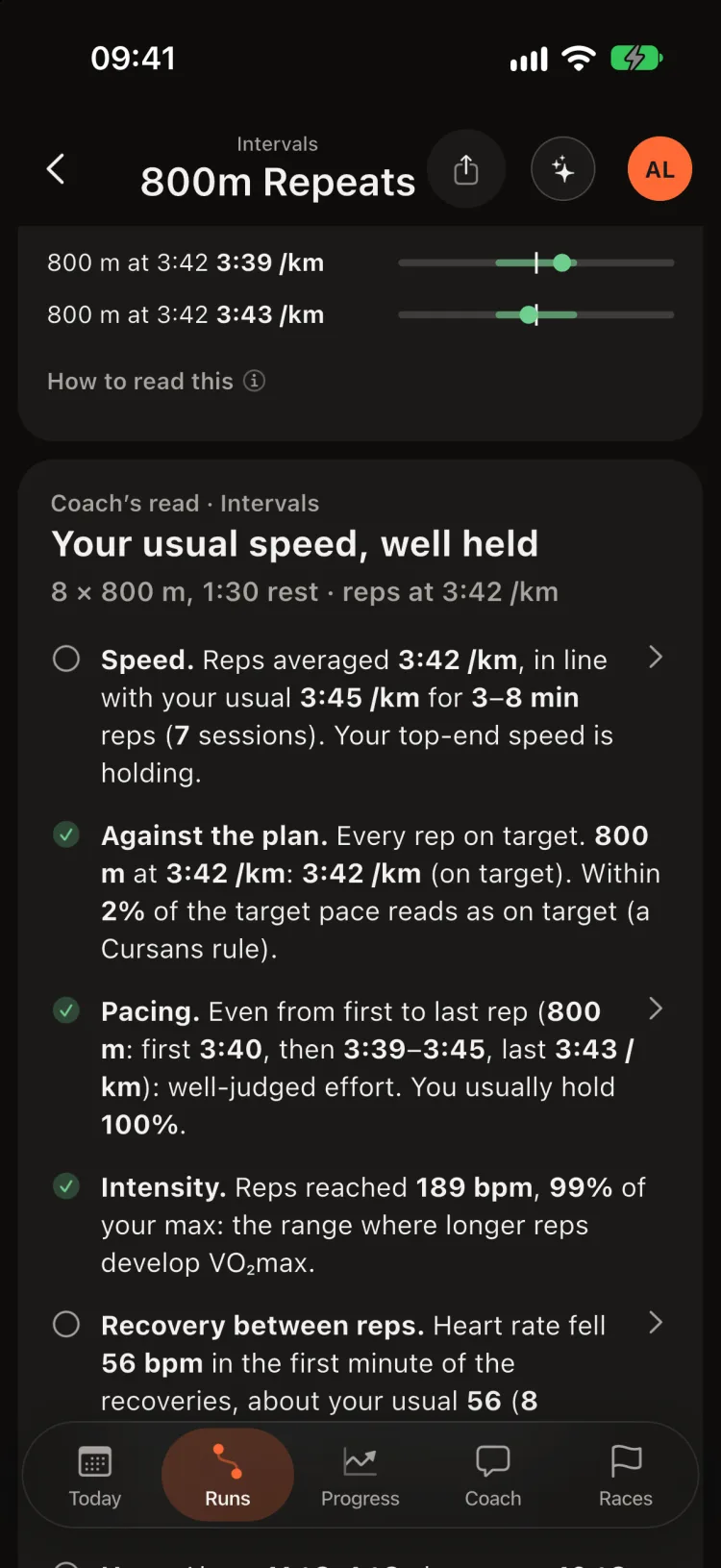
Cursans finds the session's own structure (from your watch's laps, your Runna plan or the data itself) and reads it against your usual for that kind of session.

  • Speed: reps against your usual rep pace, split by rep length.
  • Pacing: did the late reps hold up against the early ones.
  • Intensity: how high heart rate went, and what that range trains.
  • Recovery: how fast heart rate dropped between reps.
Coach’s read on an interval session: against the plan, pacing and intensity

Streams

Put any reps side by side

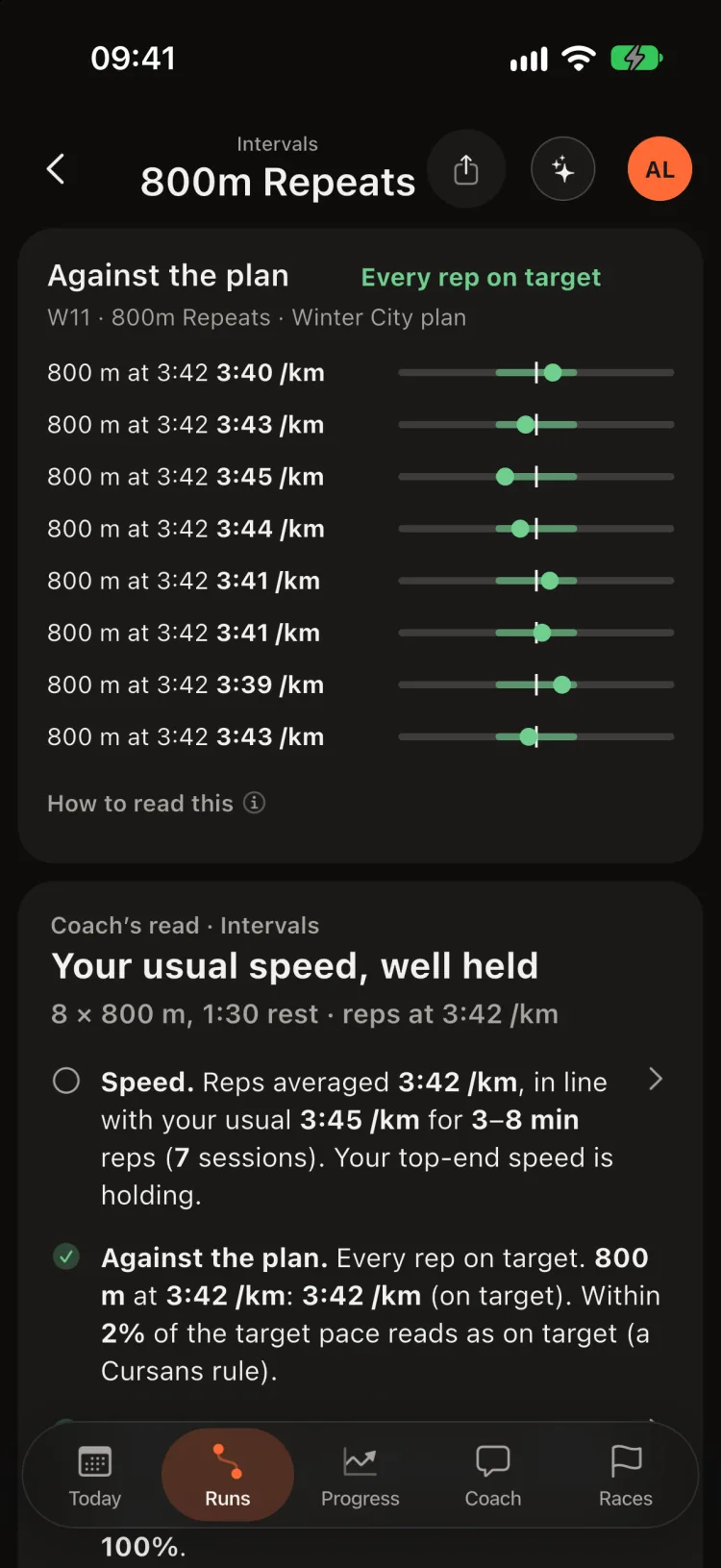
Heart rate, pace, power, cadence and more, second by second, over time or distance. Tap reps above the chart and a table compares them: pace, heart rate and speed per heartbeat, each against the first rep of the same length, with one plain sentence on what changed.

An interval run: every rep against its target pace, on target or off

Durability

Did the pace hold, and what did it cost?

Speed per heartbeat quarter by quarter, the recovery after every rep, and how much of your pace you kept from the early reps to the late ones. One verdict says it in words: "Pace slipped 2% and it cost more."

Races

Your race, explained

A race opens on its result: the finish time, one plain sentence on how it went, and the shape of the race km by km against a ±5 s band around your race pace, with heart rate under it.

  • Your races of that distance side by side, and how this one compares at the same heart rate.
  • What the race says: keep, adjust or check, each opening its evidence and source.
  • The recovery days that follow, also shown on Today and Races.
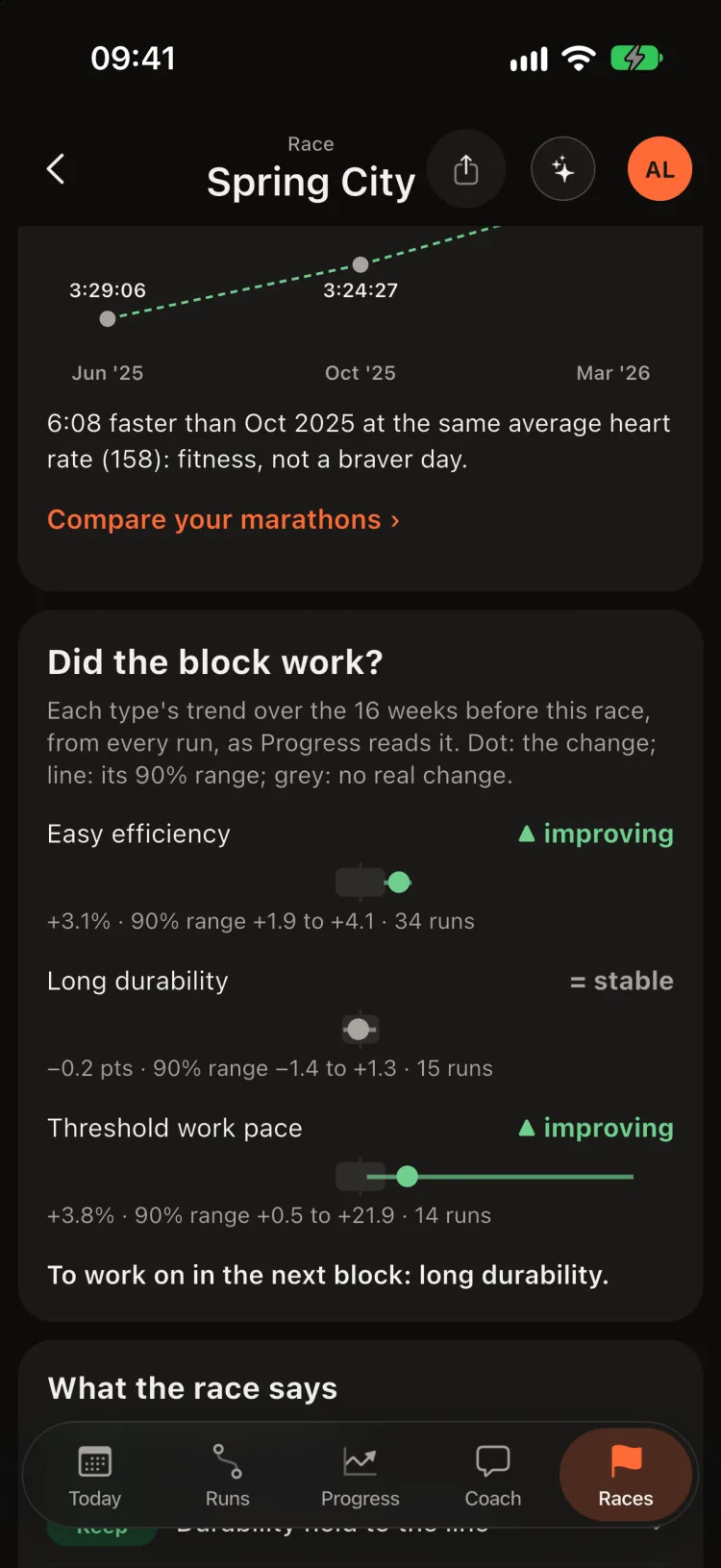
After a race: Did the block work? Each workout type’s change over the build-up

Progress

Progress you can actually trust

Every measure over weeks, per workout type. A dashed robust trend line carries the verdict, so one good day cannot fake an improvement; a change only counts as improving when it is larger than your normal variation.

  • Red rings mark runs whose workout type needs confirming.
  • Grey rings flag odd recordings, like a slipping heart-rate strap.
  • Drag across weeks to read any stretch.
Progress: one trend per workout type, each with its verdict

Predictions

See what you could race today

Predicted 5K, 10K, half and marathon times from your own best efforts, with a likely range and how strong the evidence is, not a single number that pretends to be exact.

Compare

Put two training blocks head to head

Is this block working better than the last one? Compare the last six weeks with the six before, or any blocks you define: pace, efficiency, threshold pace and fitness side by side, week by week, with the mean of each period, week by week, and a plain summary of which block leads on what.

And much more